Category Archives: essays, editorials, fisks, and rants

Making the Best of a Bad Situation

I have a knack for offending people unintentionally. Anyone who knows me well knows that I hate doing that. Darn it, if I'm going to offend somebody, I want to mean it! 😉 Seriously, though, my recent post on legalizing prostitution offended someone, and that was never my intention. The following is from an email by a woman who has escaped the hell of prostitution.

"Your thought experiment is dangerously naive and bordering on offensive. I don't believe that the comment thread does quite enough to explain your position. You spend most of that thread defending your initial assertion. As far as I can tell, you are insufficiently knowledgeable to even broach a discussion of prostitution and the ramifications of making it legal."

I am very sorry that my naivite caused offense. For the record, here's how that post and ensuing discussion came about.

Sometimes the oddest thoughts occur to me right before bed. If I'm lucky, I write them down before I've forgetten then. I'll usually discuss them later with friends, with my spiritual director, or on my blog. A few nights ago, for reasons unknown, I started wondering why prostitution illegal. More specifically, I wondered what made it, among the myriad of immoral acts, illegal when so many aren't. I decided that I'd query my blog readers.

I explicitly cast aside moral arguments because I thought the inconsistency of which immoral acts are illegal and which are not would cloud the issue. I then proceded to break down the various amoral arguments that came to mind. I really wanted to know what made this activity unacceptable by society in 49 states. At no point did I, or would I, state that I actually wanted prostitution to be legalized. Granted, I used some provacative language, but I never endorsed the practice.

Out of a discussion about a strange random thought came what I believe to be very important to Christians wishing to interact with secular government. Occational contributer and frequent commenter Steve Nicoloso posited (disapprovingly) that this country was not founded, nor is it guided by moral priciples, but rather Lockean notion of social contract. Commenter Tom Smith, on the other hand, argues that one can justify moral legislation via natural law. Putting aside the inflamatory topic of prostitution, I'd like very much to continue this conversation. Some questions that I feel are worth answering:

Was our country primarily founded on Judeo-Christian moral principles or amoral social contract theories?

Even if it was founded on Judeo-Christian moral principles, is it still guided by those principles?

If it isn't, why not, and how can Christians help change that?

If it was on social contract theories, is it still guided by those principles?

If it is, should we seek to change that? If we should, how do we go about doing so?

The question that summarizes the preceding is, "How should Christians interact with secular government?" Many of the arguments given against legalizing prostitution amounted to "because it's wrong". Before one can argue that an act is wrong, though, one must define wrong. You cannot define a right to perform a wrong action, or lack thereof, until there is agreement of what is wrong. Who defines right and wrong? Should laws only pertain to those rights and wrongs that are nearly universally agreed to or should a mere plurality or majority of the electorate be allowed determine right and wrong for the remainder?

It is my hope that a rational debate about such matters will aid Christians in the pursuit of moral legislation on nonreligious grounds. Determining whether there are universal moral concepts to base such work on or not is a core part of such a discussion. If we could be convinced, and then convince the secular world, that there are good reasons other than divine writ to ban (or maintain bans) on practices like prostitution, we'd be well on our way to formulating and executing more effective plans for getting wholesome legislation passed. Learning how to argue better on secular terms would be an invaluable asset in our efforts to abolish abortion. As long as secularists can accuse us of trying legislate our faith, no progress will be made in any of the political arenas in which we find ourselves fighting.

The preample to the Declaration of Independence ought to inspire us in these endeavors.

"We hold these Truths to be self-evident, that all men are created equal, that they are endowed by their Creator with certain unalienable Rights, that among these are Life, Liberty and the pursuit of Happiness."

"That to secure these rights, Governments are instituted among Men, deriving their just Powers from the consent of the governed."

"That whenever any Form of Government becomes destructive of these Ends, it is in the Right of the People to alter or abolish it, and to institute a new Government, laying its Foundation on such Principles, and organizing its Powers in such Form, as to them shall seem most likely to effect their Safety and Happiness."

"Prudence indeed, will dictate that Governments long established should not be changed for light and transient Causes; and accordingly all Experience hath shewn, that Mankind are more disposed to suffer, while Evils are sufferable, than to right themselves by abolishing the Forms to which they are accustomed. But when a long Train of Abuses and Usurpations, pursuing invariably the same Object, evinces a Design to reduce them under absolute Despotism, it is their Right, it is their Duty, to throw off such Government, and to provide new Guards for their future Security.

{All emphases mine]

We who believe in that Creator are among the governed from whose consent the just powers of the goverment are derived. If our government becomes destructive to the ends of life, liberty, and the pursuit of happiness, we the people have the right to alter or abolish it, to throw it off and provide new guards for our future.

I am not (and I cannot express this strongly enough) suggesting some kind of revolution. Rather, I would like to see Christians exercise their First Amendment right "peaceably to assemble, and to petition the Government for a redress of grievances" and to perform their civic duties of voting and running for office, at all levels of government, so that laws might enacted that, in accordance with the purpose our constitution, "establish Justice, insure domestic Tranquility, provide for the common defense, promote the general Welfare, and secure the Blessings of Liberty to ourselves and our Posterity". And if those laws should be found to be contrary to the Constitution of the United States, we should seek to exert our right under Article V of the that constitution to amend it.

So, dear readers, how do we go about doing these things?
Idiots On The Road

The Steelers just won the Superbowl, which means parties are over, the bars are emptying, people are going home, and there are countless idiots driving around the city honking like it's going out of style. Making matters worse are the groups of drunken college students staggering in and out of the streets with less appreciation for the fragility of life than usual. The icing on the cake, though, is the snow. There's a thin layer of icy snow on every road in Oakland and Squirrel Hill (and probably elsewhere) making driving a rather hazardous endeavor. Don't tell that to the heros in the SUVs, though. They're invincible. (They're loonies.)

My apartment building is off of one of the steepest roads in the city, Forward Avenue. Every time there's snow, freezing rain, or sleet it becomes a skating rink. That doesn't stop General Patton in his almighty SUV tank. No siree. There ain't no mountain high enough to stop him.

Right.

Most of them end up sliding back down. Just tonight, for instance, there was a fender bender caused by fools who thought they could tackle Mount Forward. Idiots. I hope nobody was hurt.

Of course, the drivers aren't the only ones to blame. The city takes a big chunk of that. You'd like to think the ridiculous taxes we pay would buy us decent snow and ice removal. As if. I doubt there'll be any salt on my road before sunrise. We're not on a major city artery, so we're chopped liver. I thought the new 61D bus route would mean better road maintenance. I suppose on weekdays before 10PM it might. It's Sunday, though, and the 61D doesn't run on weekends. So the ice capades continue as folks try to get home.

I don't think Forward will be taken better care of until a major accident happens. Even then, it'll probably take a law suit to overcome political inertia and get something done. Why give a damn about your electorate when your party has effortlessly controlled the city for decades?

*sigh* I should stop ranting and go to bed. I hope everyone, especially my readers, got home safe and sound from their Superbowl parties. Goodnight.

Number Johnny Five is Alive!

blogfest5.jpgLast night was Pittsburgh Blogfest 5. These events just keeping getting better and better. This time, we had a special treat in the form of über-blogger Robert Scoble. Robert is a “technical evangelist” for Microsoft. He also co-wrote a book with Shel Israel called “Naked Conversations : How Blogs are Changing the Way Businesses Talk with Customers“. Don’t let his current employer fool you, though. He’s been known to use his blog to dis the 800-pound gorilla on occasion, as well as praise their competitors. Anyhow, Robert was in town to participate in a panel discussion on business blogging organized by the Pittsburgh Technology Council. The event will be podcast and I’ll get you the link as soon as it’s up. Since Robert was to be in town anyhow, someone thought it would be cool to invite him to our blogfest. We celebrated his 41st birthday with a cake and the gift of a Terrible Towlâ„¢. He seemed to have a good time with us. Everyone seemed to enjoy his company as well. I spent a little while talking to him, but I didn’t too deep into anything because 1) I’d be talking out of my tuchus (regarding a lot of tech industry current events) and 2) I would have had to admit that I’d never read his blog (though I’ll rectify that soon). Despite having a pseudo-celebrity in our midst, there was no press presence this time. I’m sure those who saw the horrible picture of me in the Post Gazette are thankful for that. 😉
Continue reading

Defining an Organism

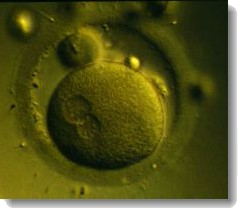
zygote.pngIn a previous discussion on embryonic stem cells, dlw asserted the following definition of an organism from Merriam Webster and the subsequent assertion:

1 : a complex structure of interdependent and subordinate elements whose relations and properties are largely determined by their function in the whole
2 : an individual constituted to carry on the activities of life by means of organs separate in function but mutually dependent : a living being

"Thus, because it is not until the fifth week that we see organogenesis begin, according to scientific research, we cannot technically call the newlyformed zygote an organism, unless you want to use a nonscientific standard def'n of organism."

The Merriam Webster definition looks acceptable, but dlw misreads it. Two definitions are proposed, but they are not both necessary for an organism. A bacterium has no organs, but is composed of plasmids, ribosomes and sundry superstructures that are guided by whole. If a bacterium, the smallest living thing, is not an organism, I'm at a loss as to what is. The same can be said for an unicellular entity, like a zygote, that was not originally part of some tissue.

A skin cell or brain cell is composed of many parts whose functions are dictated by the whole cell (at least in part) as well, but they are not organisms. A skin or brain cell has features that make very little sense if the cell is taken on its own. What good is a synapse or a dendrite on a neuron if it's not plugged into a network, for instance? If you isolate a beta cell from a Isle of Langerhan in the pancreas–whooppee–it can make insulin, but what good is that without downstream cells to receive the message?

One may counter: fine, but how long would a zygote last without the womb, or an embryo without a placental life-support system? These are reasonable counterexamples, though I do not think they are on the same plane as an isolated brain or pancreatic cell like I mentioned above.

An organism may be dependent on another organism for sustenance but may still be distinct–for instance, an E. coli bacterium need human beings, specifically our large bowel, but we can distinguish between our two respective species. A newborn human may be out of the womb, but is quite dependent on other humans for support; yet we'd still mark the newborn as being a distinctive organism.

A person may be hooked up to life-supports machines–and in the future, these machines may even be organic or alive themselves–yet I think the physicians and the patient would have little trouble distinguishing between the two on a conceptual level, even though (depending on the nature of the device(s)), the two may become rather entwined.

One may argue that a hospitalized person lived on his own before extrinsic machinery came to his aid. True, but a fertilized zygote lives on his or her own before implanting in the uterine wall and cooperating with the maternal tissues to form the placenta. There is a distinction between the two. Thus a zygote may be defined as an organism. The link I provided implicitly assumes that the organism starts as a zygote. I'd be very curious to see a serious (i.e., peer-reviewed) biological article try to overthrow that, if a reader could provide one.

The link above is to a free online version of the Molecular Biology of the Cell, which is the standard text on cell biology, and which I personally recommend as an excellent text. The questions at the end of every chapter focus not just on memorization (which is necessary), but also on problem solving skills, and having you think through how experiments (including some very important historical ones) should be designed.

Addendum 12/10/05: Wesley J. Smith points to an interview about "the fact that so many scientists feel that if they come out against cloning they will be branded anti-science and face professional repercussions". It includes a definition of "organism".

Sunday vs. December Twenty-Fifth

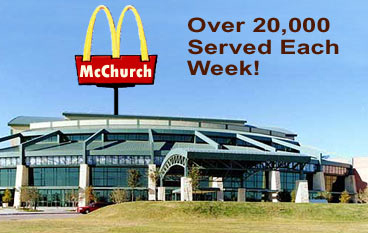
mcchurch.jpgWhat can be said that hasn’t already been said about the surprisingly widespread practice among churches of a certain size and disposition of cancelling Sunday services this year because they happen to conflict with the Feast of Our Lords’ Nativity, a.k.a., Christmas? Amy Welborn tackles it here. Terry Mattingly at GetReligion shakes his head here. (Ack! Even while I was typing this I see that Jim Kushiner of Touchstone’s Mere Comments reports on the story by way of the Middle West’s “Paper of Record”.) Get the seminal, lowly, and unassuming Louisville Courier-Journal article here, from which I quote:

Southland Christian Church near Lexington is joining several evangelical megachurches across the country in canceling services for the holiday, which this year falls on a Sunday.

Officials at the church, where about 7,000 people worship each week, said the move is designed to allow staff members and volunteers to spend the holiday with their families.

The Detroit Free Press, in expanded coverage, adds this bit to the story:

“It’s more than being family friendly. It’s being lifestyle-friendly for people who are just very, very busy,” said Willow Creek spokeswoman Cally Parkinson.

What can be said that hasn’t been said, indeed? Leave it to me to try…

Continue reading